Features
 Current Features
 Past Features


Feature Story - April 2006
Top Contractors
Top 2006 Contractors
Contractors Thinking Heavenly Thoughts

by Craig Barner

Regardless of their loyalties, some Midwest contracting executives might feel the same as do the fans of the World Champion Chicago White Sox:

Is this heaven? Can this year be a repeat of 2005?


advertisement

Times are good for construction in the Midwest.

Starts are rising steadily throughout the region. Selected megaprojects are keeping or will keep some contractors busy for long periods-probably years in some cases.

Industry indices and projections are strong. And, executives say they are hiring in part because backlogs are increasing. Backlogs are averaging around 10 to 20 percent increases vs. a year ago and 40 to 50 percent vs. two years ago, sources say.

Most significant, the overall economy is cruising. Unemployment is moderate to low, and low tax rates and government spending on the Iraq war and homeland defense are stimulating activity.

"We are going nuts right now with opportunities coming our way," said Paul Hellermann, president and chief operating officer of Chicago-based general contractor Bulley & Andrews LLC. Other executives mirrored his enthusiasm.

But the path to heaven is often fraught with the torments of hell.

Loud laments are heard from contractors about the recent and occasionally steep price increases for raw materials.

Data from the Alexandria, Va.-based Associated General Contractors of America find that the price index for asphalt is up 18 percent; gypsum products, 15 percent; plastic products, 13 percent; and concrete products, 10 percent.

"I think material prices are going to have a significant effect on project viability in the next 12 months, as will [the rebuilding since] Hurricane Katrina," said Michael Meagher, senior vice president of Chicago-based James McHugh Construction Co.

And, because of the strong market, subcontracting, service and other fees can be expected to rise.

"The economy is strong, and we are busy, and those tend to push the rate increases higher because the unions know they can get them," Hellermann added.

Sweetness

But the construction starts situation in 2005 was sweet music, indeed.
Every major city in Midwest Construction's coverage expanded in 2005, and the increases were significant.

Chicago surged 14.1 percent, to $20.5 billion; Indianapolis increased 13.4 percent, to $6.0 billion; Milwaukee grew 13.2 percent to $3.1 billion; and St. Louis went up 9.5 percent to $5.6 billion.

"Last year seemed to be noticeably stronger than the year before, which was a significant improvement over two years ago," said Ken Isaacs, president of

Homewood-based general contractor Graycor Inc. "I think the local markets have increasingly been stronger."

Midwest markets vary slightly from city to city, but the strongest across the region appear to be medical, university and research, retail and high-rise residential.

The condominium craze continues unabated and is driven by empty nesters and singles. Data from Chicago-based Appraisal Research Counselors shows that 3,041 units were delivered in Chicago in 2005, and 4,446 deliveries are projected in 2006, nearly a 50 percent increase.

Other Midwest cities are getting into the drive to develop downtown. For example, the 26-story Park East Tower recently announced in St. Louis will reportedly be the first high-rise residential development in the Gateway City in 35 years.

A number of explanations are given for the bullish market.

The Midwest, which recovered slowly in the years immediately after the Sept. 11 terrorist attacks, is experiencing pent-up demand. Consumer spending, which has a big impact on the overall economy, is spilling over into construction.

"I think you have to credit the overall economy because you can't point to low interest rates-they're higher now," said Richard Tilghman, senior vice president of Chicago-based Pepper Construction Co. He was referring to the Federal Reserve's raising interest rates to keep a rein on inflation.

If the implications of one economic index are correct, the good times are likely to continue in construction.

In January, the Washington, D.C.-based American Institute of Architects announced that billings at U.S. architecture firms were positive every month in 2005 for the first time since 2000, the last year of the most recent sustained economic expansion.

As a result, 2006 could be the best season for nonresidential construction in six years.

The Architecture Billings Index, an indicator of nonresidential construction, had a rating of 50.4 in December 2005-a score above 50 is desirable-compared with 58.4 in November 2005 and 47.8 in December 2004.

"The nonresidential upturn should continue into 2007 and can be attributed to pent-up demand for new projects that weren't able to be undertaken in recent years," said AIA chief economist Kermit Baker, who released the data.

Furthermore, plans are crystallizing that could ensure a steady stream of construction in certain markets.

In Illinois, for instance, Gov. Rod Blagojevich and legislative leaders are moving toward a deal to issue up to $3 billion in bonds for transportation and other projects across the state. It would be the largest bond issue since former Gov. George Ryan's Illinois First initiative was inked in the late-1990s.

Regardless of the form the proposed deal takes, megaprojects abound in the Midwest and are keeping contractors busy.

Last fall, machinery started moving dirt at Chicago's O'Hare International Airport where a $15 billion expansion is starting.

In Wisconsin, the $7 billion Power the Future energy project in the Milwaukee area is moving briskly at the Port Washington and Oak Creek power plants. And, downtown Milwaukee's $850 million Marquette Interchange is moving into its second year.

Work has started on the new midfield terminal that is part of the $1 billion Indianapolis International Airport, and construction has started on the $800 million Indiana Stadium and convention center.

Not to be outdone, Missouri will see a $900 million cement plant project in St. Genevieve County that reportedly would be the world's largest.

Staffing Indianapolis Projects, Others

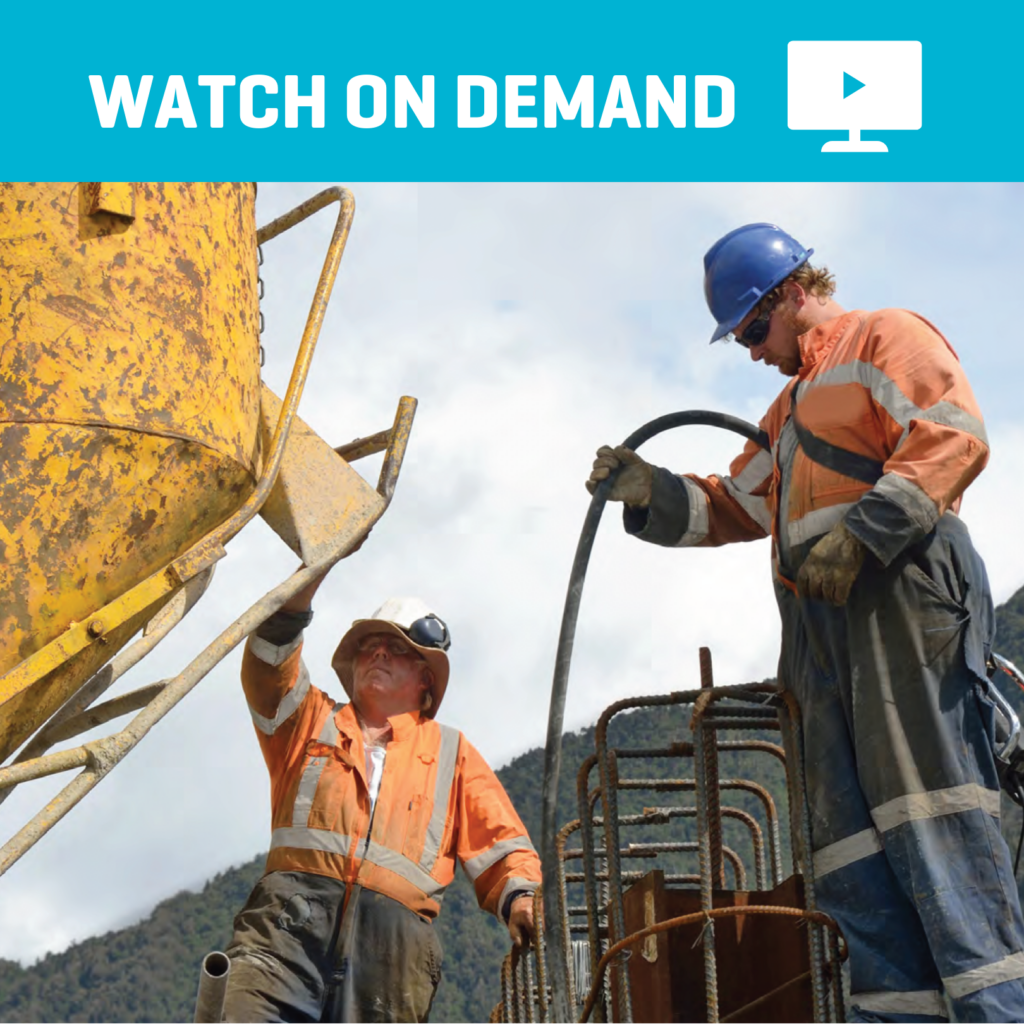
Things are so good that some contractors say it is difficult to find capable people to fill openings partly because of the abounding number of job opportunities.

Unbelievably, in Indianapolis, a labor shortage at the craft level has even been projected because the market is so torrid.

The Indianapolis-based Indiana Construction Roundtable Inc., an organization of construction buyers, is projecting that 2,400 skilled craftspeople will be needed this year and 2007 to staff construction projects and provide a reasonable cushion for the summer season. The total supply for 14 crafts peaked in 2005 at 35,738 workers.

"It will be extremely difficult to find the qualified individuals to handle all the work," said Jeff Hagerman, president of Indianapolis-based general contractor Geupel DeMars Hagerman and executive vice president of Fort Wayne-based contractor Hagerman Construction Co., which partly owns GDH.

A related issue that is getting increasing urgency is the lack of appeal of a construction career in a society that values professional skills and demands high salaries, said Graycor's Isaacs.

"It's probably the single, most-important long-term challenge for the industry: how to attract, challenge and retain the key you need," he said. "The underlying problem is that construction is not viewed as a highly desirable, sexy industry."

Meanwhile, the once-proud and long-dormant steel industry is showing signs of life with a number of construction projects.

Graycor has maintained the staffing to service projects at steel plants nationwide despite the huge layoffs and consolidations in that market, Isaacs said.

"Starting a year ago, we noticed a fairly significant increase in opportunity at those surviving [steel] companies," he said. U.S. Steel Corp., Mittal Steel and others with a big Midwest presence are starting projects.


Click here for Top 2006 Contractors List>>


 Click here for more Features >>


Sponsors

© 2008 The McGraw-Hill Companies, Inc.
All Rights Reserved